
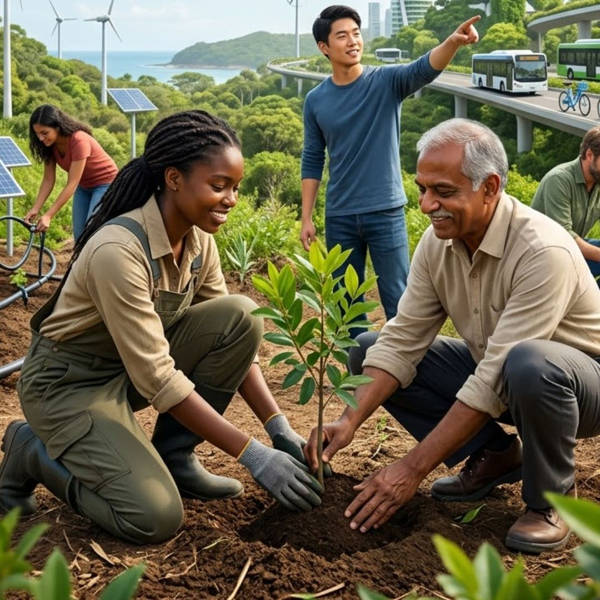
From climate action and car-free cities to urban forests and plastic laws, here is how the world is responding to environmental challenges in 2026.
Why World Environment Day 2026 Matters More Than Ever
Every year on June 5, millions of people, organizations, businesses, and governments come together to celebrate World Environment Day, the United Nations' largest global platform for environmental awareness and action.
In 2026, the event arrives at a critical moment. Around the world, communities are facing increasingly visible environmental challenges, including extreme heat, droughts, floods, wildfires, biodiversity loss, and pollution. At the same time, governments, cities, scientists, and citizens are launching ambitious initiatives aimed at creating a cleaner and more sustainable future.
The official theme of World Environment Day 2026 is Climate Action, and the global observance is being hosted by Azerbaijan. The campaign highlights both the urgency of climate change and the growing number of solutions emerging across the planet. According to the official World Environment Day campaign, cities are being redesigned, forests are being restored, renewable energy is expanding, and communities are finding innovative ways to reduce environmental impacts.
This article explores some of the most interesting environmental trends and initiatives shaping 2026, with a focus on practical actions and real-world examples.
What Is World Environment Day?
World Environment Day was established by the United Nations in 1972 and has been celebrated annually since 1973. Today, it involves participation from more than 150 countries and has become one of the largest environmental awareness events in the world.
Its objectives include:
- Raising awareness about environmental challenges
- Encouraging sustainable lifestyles
- Promoting environmental education
- Inspiring policy changes
- Mobilizing communities for action
Each year focuses on a specific environmental theme. While 2025 centered on ending plastic pollution, 2026 places climate action at the heart of the global conversation.
Climate Action Takes Center Stage in 2026 🌎
Why Climate Action?
Climate change is no longer a distant issue discussed only by scientists. Around the world, people are experiencing:
- More frequent heatwaves
- Stronger storms
- Longer droughts
- Increased wildfire risks
- Rising sea levels
The 2026 campaign emphasizes that climate solutions already exist and that accelerating their implementation is essential. Renewable energy projects, sustainable transport systems, ecosystem restoration, and energy-efficient cities are becoming key components of climate strategies worldwide.
The Rise of Car-Free and Low-Traffic Cities 🚲
One of the most visible environmental trends in recent years is the transformation of urban transportation.
Why Cities Are Reducing Car Dependence
Transportation remains a significant source of greenhouse gas emissions in many countries. To address this challenge, cities are investing in:
- Public transportation
- Cycling infrastructure
- Pedestrian zones
- Electric mobility
- Low-emission districts
The goal is not necessarily to eliminate cars completely but to create urban spaces where walking, cycling, and public transport become more attractive and practical.
The Benefits of Car-Free Zones
Cities that prioritize people over vehicles often experience:
Cleaner Air
Reducing traffic decreases emissions of pollutants that affect respiratory health.
Lower Noise Pollution
Quieter streets improve quality of life and reduce stress.
Safer Communities
Pedestrian-friendly areas tend to experience fewer traffic accidents.
More Green Space
Former parking areas can be converted into parks, gardens, and public gathering spaces.
A Growing Global Movement
Across Europe, Asia, and Latin America, municipalities are experimenting with:
- Car-free weekends
- Temporary pedestrian zones
- Bicycle superhighways
- Electric bus fleets
- Urban mobility plans
The redesign of cities for people rather than vehicles is becoming an important part of environmental policy worldwide.
Urban Forests: Bringing Nature Back Into Cities 🌳
One of the most exciting environmental trends of 2026 is the rapid expansion of urban forests.
What Is an Urban Forest?
An urban forest includes:
- Street trees
- Public parks
- Community gardens
- Green corridors
- Native vegetation integrated into urban areas
These green spaces offer much more than aesthetic beauty.
Why Urban Forests Matter
Cooling Cities
Trees help reduce the urban heat island effect by providing shade and lowering surface temperatures.
Improving Air Quality
Vegetation can capture particulate matter and improve local air conditions.
Supporting Biodiversity
Urban forests create habitats for birds, insects, and pollinators.
Improving Mental Health
Research consistently shows that access to green spaces can reduce stress and improve psychological well-being.
Reforestation Is Expanding Globally
The World Environment Day 2026 campaign highlights forest restoration as a key climate solution. Around the world, cities are increasing investments in tree planting and ecosystem restoration to improve resilience against climate change.
The Global Fight Against Plastic Pollution ♻️
Although climate action is the primary theme for 2026, plastic pollution remains one of the most important environmental issues.
The momentum generated during World Environment Day 2025 continues to influence policies and public awareness campaigns worldwide. The United Nations has emphasized the need to reduce plastic waste throughout its entire lifecycle—from production to disposal.
Why Plastic Pollution Is Such a Challenge
Globally, hundreds of millions of tonnes of plastic are produced each year, and a significant portion becomes waste. Plastic pollution affects:
- Oceans
- Rivers
- Lakes
- Soils
- Wildlife
- Human health
Microplastics have even been detected in food, water, and human tissues.
New Plastic Regulations
Many governments are introducing policies such as:
Single-Use Plastic Restrictions
Bans or limitations on items like:
- Plastic bags
- Disposable cutlery
- Plastic straws
- Polystyrene containers
Extended Producer Responsibility
Manufacturers are increasingly required to manage the waste generated by their products.
Recycling Targets
Countries are setting more ambitious recycling goals and investing in circular economy systems.
Examples of Policy Innovation
The Republic of Korea, host of World Environment Day 2025, has pursued a comprehensive strategy addressing plastics across their entire lifecycle, while regions such as Jeju have established ambitious goals to reduce plastic pollution.
Meanwhile, Azerbaijan has implemented restrictions on certain thin single-use plastic bags as part of broader environmental reforms.
Renewable Energy Continues to Expand ☀️💨
Perhaps the most transformative environmental trend is the rapid growth of renewable energy.
Solar Energy Growth
Solar power installations continue expanding due to:
- Falling costs
- Improved efficiency
- Government incentives
Rooftop solar panels are becoming increasingly common in homes, schools, and businesses.
Wind Energy Development
Large-scale wind farms are contributing more electricity to national grids, helping reduce dependence on fossil fuels.
Countries around the world are investing heavily in renewable energy infrastructure as part of their climate commitments. Azerbaijan itself has highlighted major solar and wind projects within its green growth strategy.
Why Renewable Energy Matters
Renewable energy can:
- Reduce greenhouse gas emissions
- Improve energy security
- Create jobs
- Reduce air pollution
For many experts, expanding clean energy remains one of the most effective tools for addressing climate change.
Nature-Based Solutions Are Becoming Mainstream 🌱
One of the most important concepts in environmental policy today is the idea of nature-based solutions.
What Are Nature-Based Solutions?
These are actions that use natural ecosystems to address environmental challenges.
Examples include:
- Wetland restoration
- Mangrove protection
- Forest restoration
- Green roofs
- Urban parks
Multiple Benefits
Nature-based solutions can simultaneously:
- Reduce flood risks
- Improve biodiversity
- Capture carbon
- Enhance public health
- Strengthen climate resilience
This approach is increasingly influencing urban planning and environmental strategies worldwide.
Citizens Are Driving Change Too 👨👩👧👦
Environmental progress is not driven solely by governments.
Millions of people participate in:
- Tree planting campaigns
- Community cleanups
- Recycling programs
- Environmental education events
- Sustainable lifestyle initiatives
World Environment Day regularly mobilizes local actions ranging from neighborhood cleanups to environmental awareness campaigns.
Environmental Vocabulary You Should Know 📚
If you are learning about environmental issues, these key terms are useful:
| Term | Meaning |
|---|---|
| Climate Action | Efforts to address climate change |
| Sustainability | Meeting present needs without harming future generations |
| Renewable Energy | Energy from naturally replenishing sources |
| Biodiversity | The variety of living species in an ecosystem |
| Circular Economy | An economic model focused on reuse and recycling |
| Carbon Footprint | Total greenhouse gas emissions caused by an activity |
| Reforestation | Planting trees to restore forests |
| Plastic Pollution | Environmental contamination caused by plastic waste |
| Urban Forest | Trees and green spaces within cities |
| Ecosystem Restoration | Repairing damaged natural environments |
What Can Individuals Do This World Environment Day?
Many people wonder whether individual actions really matter.
While systemic changes are essential, personal choices can contribute to broader environmental progress.
Practical Actions
- 🌿 Use reusable bags and bottles
- 🚲 Walk, cycle, or use public transportation when possible
- 🌳 Participate in local tree-planting projects
- ♻️ Recycle correctly according to local guidelines
- 💡 Reduce energy consumption at home
- 🥗 Reduce food waste
- 📚 Learn more about environmental issues and share accurate information
Looking Ahead: A Decisive Decade for the Planet
World Environment Day 2026 arrives during what many scientists and policymakers describe as a critical decade for environmental action.
The encouraging news is that solutions are already being implemented:
- Cities are becoming greener
- Renewable energy is growing
- Plastic regulations are strengthening
- Forest restoration projects are expanding
- Public awareness is increasing
Challenges remain significant, but the environmental movement today is increasingly focused on practical action rather than simply identifying problems.
Conclusion 🌍💚
World Environment Day 2026 is more than a symbolic celebration. It is a reminder that environmental protection depends on decisions being made right now—in governments, businesses, cities, communities, and households.
This year's focus on Climate Action reflects the urgency of the challenges facing the planet, but it also highlights something equally important: progress is happening. From car-free urban zones and expanding urban forests to new plastic regulations and renewable energy projects, real environmental solutions are taking shape around the world.
The future of the environment will not be determined by a single event or a single policy. It will be shaped by millions of actions, large and small, that collectively move society toward a more sustainable future.
And that is precisely the message of World Environment Day 2026: change is possible, and it is already underway. 🌿🌎
Sources
- United Nations Environment Programme (UNEP) – World Environment Day 2026 Overview
- World Environment Day Official Campaign 2026 (Climate Action)
- United Nations Environment Programme – Republic of Korea and World Environment Day 2025 (Beat Plastic Pollution)
- World Environment Day Official Theme and Host Information (2025–2026)
- United Nations Environment Programme environmental outreach materials and campaign resources
- Official World Environment Day Global Platform (2026 Climate Action Campaign)
