
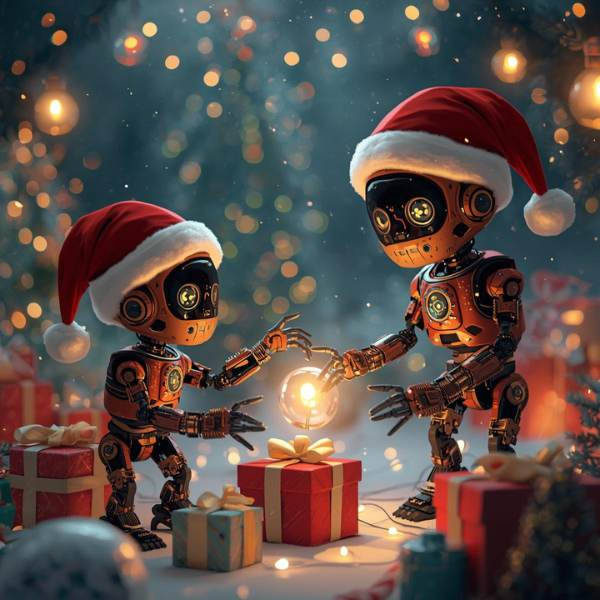
Christmas is evolving — and at its heart is artificial intelligence. What once was a season of browsing shop windows, pulling out photo albums, or hearing the same carols now involves algorithms, chatbots, smart decorations, personalized experiences and even AI-generated gifts. If you’re curious about how your holiday may look different — or how to make the most of the tech wave — this article is for you.
We’ll examine: how AI influences holiday shopping; how it changes gifts and experiences; how decorations, light shows and smart homes are impacted; and what ethical, social and practical questions arise.
Why AI meets Christmas: The convergence of tech and tradition
On one hand, Christmas carries deep tradition: gift-giving, decorations, family, ritual, lights in winter, carols, gatherings. On the other, technology (and AI specifically) is now embedded in many areas of life: shopping, home automation, communication. The holiday season amplifies both — more shopping, more social connection, more emotions, more opportunities for tech to assist or disrupt.
Here’s why the intersection matters:
- Volume of activity: The holiday season is a peak time for retail, online traffic, social sharing, travel, home décor. AI systems thrive when large data, interactions and repeat behavior are present.
- Personalization expectation: In an era of streaming services, social media, and algorithm-driven content, consumers expect personalized experiences across shopping, gifts, and home décor. AI delivers.
- Smart home & IoT expansion: More households now have smart lighting, voice assistants, connected devices — making Christmas decorations and holiday ambience ripe for tech integration.
- Logistics and supply-chain pressure: Holiday rushes push retailers to optimize operations; AI helps manage orders, stock, promotions, and predictions.
- Emotional & experiential dimension: Christmas is about experience as well as material gifts. AI enables immersive entertainment, augmented reality, personalized messages and interactive decorations.
As the data show, the result is not marginal — it’s significant: for instance, one study found one-third of consumers plan to use AI for holiday shopping. (See sources at the end.)
AI in Holiday Shopping & Gift-Selection
Personalized recommendations & gift ideas
In 2025, AI tools are widely used for suggesting gift ideas, refining shopping searches, and curating options. For example: input a few details (recipient age, interests, budget) and an AI assistant proposes a tailored list of gifts. But it’s not perfect — a report noted that while AI is efficient, it lacks true personal knowledge of relationships, habits or quirks.
The benefits:
- Time-saving: Instead of browsing thousands of items, AI filters and prioritizes.
- Relevance: Based on purchase history, preferences, AI can surface gifts you might not have discovered.
- Inspiration: When you’re stuck, AI can suggest novel ideas.
But the limitations:
- Emotional mismatch: AI suggests what patterns show, but may miss nuance. One article gives the example of a gift list that suggested a vacuum cleaner and a budgeting book for a spouse… practical, but maybe not the most emotionally resonant.
- Data privacy: When AI draws from browsing history, social media, past purchases, it raises questions.
- Over-reliance: If everyone uses the same AI patterns, gifts risk becoming formulaic.
AI in retail operations and e-commerce
Beyond gift choice, AI is deeply involved in how retailers handle holiday shopping:
- Recommendation engines: On e-commerce sites, AI suggests “you might also like” gifts, bundles, cross-sells.
- Chatbots & virtual assistants: Customers ask bots for help — “What should I buy for …?” or “Do you have this in stock?” Retailers report that AI‐chat usage rose sharply during the 2024 holiday stretch.
- Price optimization & stock prediction: AI models help determine which products will sell, how much stock to allocate, and dynamic pricing.
- Fraud detection & returns: With high returns in holiday shopping, AI helps identify suspicious patterns and manage logistics.
For example, one study found that online holiday sales in the U.S. reached about $282 billion between Nov 1 and Dec 31 2024, with AI-based chatbots used 42% more than the previous year.
Smart gifting: AI-generated and custom gifts
The gifting experience itself is changing:
- Custom designs: AI design tools help users create bespoke gifts: AI-generated art prints, personalized video messages, voice-cloned greetings.
- Subscription services & curated boxes: AI picks items tailored for the recipient’s taste each month.
- Interactive toys & experiences: AI toys that talk, AI avatars, virtual reality gift experiences. One article notes the trend of AI-powered gifts being a big part of 2025 holiday tech lists.
So your gift may no longer just be “physical item bought,” but “AI-enhanced experience or personalized item created by algorithm.”
This raises questions about what a “gift” means in an AI era: is it the object, the personalization, the surprise?
Smart Decorations, Experiences & Holiday Tech
Smart lights, smart homes, interactive décor
Christmas décor is no longer passive. Smart devices and AI are creating dynamic holiday experiences:
- Smart lighting systems: WiFi-enabled light strings that sync to music, react to motion, or follow programmed patterns defined by AI-apps. For example, you might use an app where AI suggests color & pattern themes based on your Xmas theme.
- Home voice assistants: Alexa, Google Home or others prompting holiday playlists, controlling décor, reading holiday stories. Some households use voice assistants to schedule lights, automate timers, dim living rooms for movie night, or set mood ambience.
- Augmented reality (AR) / projection mapping: AI-driven apps can overlay virtual snow, animate your tree, or create interactive displays on windows or walls.
- Interactive toys and installations: Smart robotic decorations, AI-powered animatronics, ornaments that respond when you walk by. These are increasingly common in higher-end holiday installations.
Thus, the ambience, the décor, the “feel” of Christmas is being shaped by algorithms and connected devices.
AI and Santa: Chatbots, VR/AR visits, virtual letters
Santa Claus gets a tech upgrade:
- AI chatbots portraying Santa: Some apps enable children to chat with a Santa avatar (voice-synthesized) powered by AI, asking questions, hearing stories, receiving personalized messages.
- Virtual Santa visits: Families use AR or VR to “visit” the North Pole, ride sleighs, hang out with virtual elves — powered by AI game engines.
- Personalized video messages: Parents input child’s name, hobbies, and AI generates a video message from “Santa” tailored to that child.
- Letters to Santa handled by AI: In some services, children write letters and AI algorithms suggest replies, gifts lists or track wish-lists for parents.
These technologies blend tradition (writing to Santa, believing in magic) with modern digital experience.
Smart holiday events, immersive technology
Beyond home décor, public holiday experiences are being upgraded with AI:
- Light shows: Parks or public squares use AI to choreograph light and drone shows, reacting to music, crowd movement or social media prompts.
- Interactive shopping displays: Retailers use AI to create displays that sense passerby, show adaptive content, or even try to guess what gift a shopper wants.
- Virtual experiences: Holiday markets may supplement physical stands with AR/VR components; kids may navigate a virtual elf workshop via an AI platform.
So the holiday “experience economy” is increasingly tech-inflected.
Behind the Scenes: AI in Logistics, Display, Personalization
We’ve covered visible effects (shopping, décor, gifts). It’s important to glimpse the less visible but huge changes:
- Supply-chain optimization: AI predicts demand for popular toys or décor items. If dashboards detect a surge, stock is shifted accordingly. This helps avoid the dreaded “sold out” or “wrong gift” scenario.
- Returns prediction & management: Holiday returns are costly. AI models anticipate which gifts may be returned (based on product type, buyer history) and adjust inventory or recommend alternative options.
- Personalized email/marketing: Retailers use AI to schedule holiday campaigns, tailor subject-lines, suggest items you personally are likely to buy. That gift you saw “just when you were thinking about it” may well be the algorithm at work.
- Customer service chatbots: Holiday season increases customer service needs — bots handle standard queries (“Where is my gift?”, “Can I change shipping address?”) freeing human agents for complex issues.
- Smart event planning: For big houses or commercial holiday installations, AI helps manage lighting sequences, audio-visual synchronization, and guest flows.
In short: the holiday magic you feel is supported by a lot of digital & algorithmic infrastructure.
Ethical, Social and Economic Implications
As with any major shift, AI + Christmas brings benefits and questions. Here are some key dimensions:
Data privacy and personalization fatigue
- Privacy risks: To personalize, AI often draws on purchase history, browsing behavior, social media. Who sees that data? How is it stored? Especially for gifts, you may not want algorithms revealing your secrets.
- Algorithmic bias: If AI suggests gifts based on demographic stereotypes, it may reinforce clichés (e.g., “women like this”, “men like that”).
- Emotional authenticity: If an AI writes “From Santa” video or a message, is the gift still genuine? Some argue too much tech may undermine the personal touch.
- Fatigue/overload: If everything is personalized and suggested, does that reduce surprise, discovery or delight? There’s a risk of “algorithmic sameness”.
Automation, jobs & Christmas economy
- Retail jobs: AI handling customer queries or inventory may reduce seasonal employments or change their nature.
- Craft vs algorithm: As more gifts become “AI-designed,” what does that imply for artisans, handmade markets, local small businesses?
- Sustainability: The faster turnover, algorithm-driven purchases may increase waste (returns, unwanted gifts) unless managed responsibly. For instance, one report noted higher return rates with online holiday shopping.
Emotional & social authenticity in a high-tech holiday
- Human connection: Christmas is often celebrated for connection, memory, togetherness. If tech becomes dominant, will the human-to-human moment suffer?
- Children and toys: AI-powered toys raise questions about play, imagination and data collection. Are children interacting with “smart devices” instead of real play?
- Inequality & access: Tech-enabled holidays may amplify divide between those who can afford high-tech experiences vs. those who cannot.
- Cultural traditions: Holidays rooted in tradition may change faster than communities adapt; some may feel dispossessed or “left behind” by high-tech shifts.
These are not reasons to avoid AI entirely — but to integrate thoughtfully.
How to Harness AI for a Better Christmas (Practical Tips)
If you’re curious about using AI to enhance your holiday — here are some actionable suggestions without losing the essence of the season.
✅ Use AI as a tool, not a replacement
- Let AI suggest gifts, but you pick the final one with the person’s story in mind.
- Use AI décor templates, but add your family touch (homemade ornament, personal photo).
- Chatbots can help with shopping or logistics; don’t let them handle emotional chats entirely (with kids, family).
✅ Protect privacy & keep control
- Be aware what data you share with shopping assistants or gift-tools. Limit permissions.
- For children’s AI toys or Santa-messages, check privacy policies and data-collection practices.
- Diversify your sources — don’t rely on a single recommendation engine for everything.
✅ Balance tech with tradition
- If you use smart lights, pair them with analogue rituals: lighting candles, singing, unplugged moments.
- Gift-giving: maybe do one algorithm-suggested gift + one handmade or memory-based gift.
- Use AI for convenience (shopping, logistics) and free up time for gatherings, conversation or quiet reflection.
✅ Be mindful of returns, waste & ethics
- Use AI tools that highlight sustainability (eco-friendly gift suggestions).
- When AI helps you buy, check dimensions, fit, specs yourself to reduce returns.
- Consider local small businesses: AI can still suggest them!
✅ Teach children healthy tech/holiday balance
- If they receive an AI toy, schedule tech-free play too. Encourage imagination, creativity and human interaction.
- Use AI Santa-visits as a fun add-on—not the only highlight of the season.
✅ Stay ahead of trends
- If you’re a gift-giver, start early. AI retirement or release patterns might make some “smart gifts” sell out.
- Explore AR/VR holiday events, smart home décor offers, but evaluate cost vs joy.
Conclusion
Artificial intelligence is changing Christmas in significant ways: how we shop, how gifts are chosen or created, how decorations respond, how experiences are delivered. The season is becoming more personalised, more interactive, more data-driven. But it remains essential to ask: does this enhance the spirit of the season — connection, generosity, memory — or does it risk diminishing it?
By embracing AI thoughtfully — using it to enable human moments rather than replace them — you can benefit from its convenience and power while preserving the heart of Christmas. Whether you’re excited about AI-gift tools, smart décor, or interactive Santa chats, remember: the best holiday magic isn’t just the latest gadget—it’s the human story you share.
Enjoy this holiday season with tech as your helper, not your master. 🎁✨
Sources
- Fast Company – “Why your next Christmas gift might be picked by AI” (Oct 6 2025)
- Retail Dive – “One-third of consumers plan to use AI for holiday shopping” (Oct 2 2025)
- Wilx – “What The Tech? Christmas Gifts and AI” (Oct 9 2025)
- KOB – “Using AI for your Christmas gifts” (Oct 9 2025)
- Reuters – “AI-influenced shopping boosts online holiday sales, Salesforce data shows” (Jan 6 2025)
